
Soft Skills in healthcare: why AOU Sassari decided to invest in people
When we talk about quality of care, we immediately think of technology, protocols, and diagnoses. But there is a dimension that is too often overlooked: the way healthcare professionals relate to one another, and to patients and their families.

When we talk about quality of care, we immediately think of technology, protocols, and diagnoses. But there is a dimension that is too often overlooked: the way healthcare professionals relate to one another and to patients and their families.
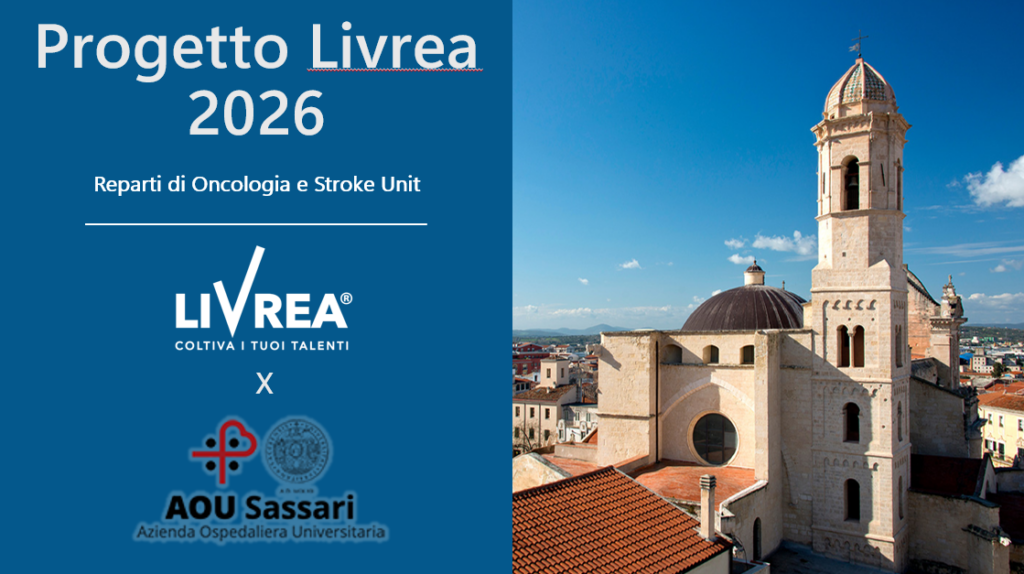
It is from this awareness that the pilot project launched by the Azienda Ospedaliero Universitaria di Sassari (AOU Sassari), in collaboration with Smartpeg, was born, taking place in the Stroke Unit and Medical Oncology wards of the Santissima Annunziata hospital.
1. The context: when technical skill is not enough
Modern healthcare is extraordinarily effective on a clinical and technological level. Advanced diagnostic tools, evidence-based protocols, increasingly refined specialisations: 21st-century medicine saves lives that would have been lost just a few decades ago.
And yet something risks being lost in the very acceleration of that technical progress:
- the relationship
- the act of listening
- the capacity to be present with a frightened patient or a family awaiting a difficult diagnosis
- the way a team works under pressure, manages internal conflict, and supports one another through moments of high emotional intensity
These are not “extras” on top of clinical competence. They are competencies in their own right (soft skills, or transferable skills) and they significantly determine the perceived quality of care, the wellbeing of healthcare workers, and ultimately patient outcomes.
It is from this awareness that AOU Sassari launched a 12-month experimental programme involving staff in the Stroke Unit and Medical Oncology ward of the Santissima Annunziata hospital, using innovative tools for assessment, self-evaluation and 360° Feedback.
2. An experimental project with a clear horizon
The aim is to move beyond performance evaluation as a bureaucratic formality and transform it into a tool for professional growth, self-awareness and improved patient care.
Luisa Baule, the project’s administrative lead and a senior officer in the Management Control unit at AOU Sassari, outlined the vision driving the initiative:
“The goal is to move beyond a mechanistic view of performance evaluation. We don’t want it to remain just a compliance exercise carried out once a year. We want it to become an ongoing process of improvement, useful for communicating, exchanging views and growing together. Evaluation needs to become a continuous process of collective reflection and development. Only then does it stop being an archive of judgements and start being a map for guiding change“.
AOU Sassari is among the first healthcare organisations in Italy to launch a structured programme of this kind within hospital wards. That distinction is no accident, it reflects a leadership team that has chosen to put people, both staff and patients, at the centre of its organisational strategy.
3. Why Soft Skills?
The decision to focus on transferable competencies rather than clinical or technical ones stems from a clear-eyed reading of the environments in which the two wards operate.
The Stroke Unit and Medical Oncology are high-complexity settings, both clinically and emotionally, where the relationship with patients and their families is of fundamental importance. These are wards where staff face crisis situations, difficult prognoses and painful conversations every single day. The ability to carry that emotional weight and to transform it into a composed, qualified presence for the patient, is not a given. It is a competency that can be mapped, trained and developed.
The project focuses on mapping and strengthening the following soft skills:
- active listening
- empathy
- stress management
- effective communication
- teamwork
- problem solving
- leadership
- organisational ability
- person-centred orientation
These competencies do not replace clinical expertise, they complement it, and often multiply its effectiveness.
4. The voice of those who believe in it
Alberto Mura, Administrative Director of AOU Sassari, highlighted how modern medicine has become increasingly technical and specialised, making it all the more necessary to bring the person back to the centre and to recognise those relational competencies that directly shape the perceived quality of care.
Gianni Cicogna, President of Smartpeg, explained the philosophy underpinning the project:
“We are not talking about judging people, we are talking about helping them know themselves better. Every one of us carries talents and distinctive qualities. The goal is to bring those competencies to the surface, put them at the service of colleagues and patients, and improve how teams work together“.
These words resonate with a vision Smartpeg has held for years: evaluation is not a judgement, it is a map. And a map exists to help you find your way, not to be judged by.
5. How the programme works: tools and methodology
The project is structured around three integrated tools that together build a comprehensive system of listening and development.
Soft Skills Assessment
Each member of staff is evaluated using standardised instruments that measure transferable competencies against the expected profile for their role. The outcome is not a score, it is a profile, with clearly identified strengths and areas for development.
Self-Evaluation
Self-awareness is central to the process. Each professional is invited to assess their own competencies, building a foundation for reflection that feeds into ongoing dialogue with line managers and the wider team.
Feedback 360°
The perspective broadens: colleagues, managers and other professionals encountered in daily work all contribute to building a fuller, more honest picture of each person’s competencies. The process supports internal communication, self-evaluation and greater individual and collective awareness.
The programme runs for 12 months and includes moments of collective feedback, in which aggregated data becomes material for the team as a whole to reflect on, not merely a tool for individual evaluation.
6. Why this project matters beyond healthcare
There is a lesson in this project that speaks to any organisation that manages people. Soft skills are not a “soft” topic, they are the factor that determines whether a team thrives or burns out, whether people grow or stagnate, whether an organisation can meet complexity head-on or simply endures it.
In an Oncology ward as in a manufacturing company, in a Stroke Unit as in a sales team: the quality of relationships, the ability to communicate, to collaborate and to manage emotions under pressure do not develop by osmosis. They are mapped, developed and cultivated over time, with the right tools and within an organisational culture that recognises them as strategically important.
This is the work that Smartpeg does every day, across organisations in a wide range of sectors. The project with AOU Sassari is, today, one of its most significant examples.
7. Conclusion
Smartpeg is proud to be accompanying this transformation, not because it is a high-profile or award-winning project, but because it represents precisely the kind of change we believe in: deep, systemic and people-centred.
The future of care runs through people. And people grow when they are listened to, truly known and valued for who they really are.