
AI and Soft Skills in the workplace: LIVREA’s first live event makes a big impression
On 9 June 2026, in the Netherlands, LIVREA BV hosted its first live event: a full day of discussion on artificial intelligence, soft skills, and the future of organisations.
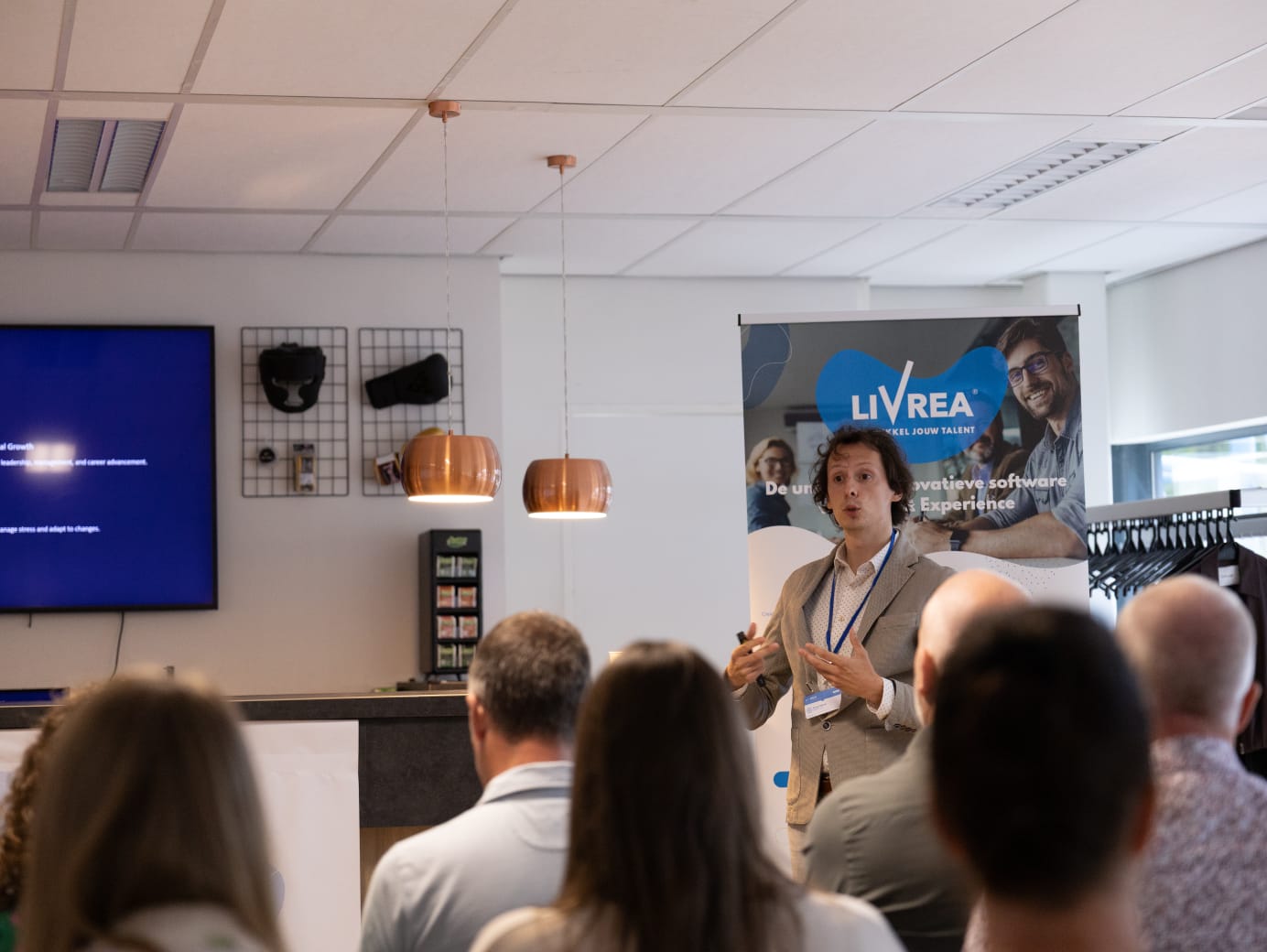
On 9 June 2026, LIVREA BV hosted its first live event in the Netherlands: a day of open conversation on artificial intelligence, soft skills and the future of organisations. Four outstanding speakers took the stage. In the room: HR professionals, managers and business owners united by a shared conviction, before we can talk about AI, we need to talk about people.
1. A day to remember
“I didn’t dare dream it would go like this”.
Those are the words of Nicolas Pastor, Founder of LIVREA BV, reflecting on the day. The event, titled “Skills & AI op de werkvloer”, was held on 9 June 2026 in a deliberately intimate setting, far removed from the logic of large-scale conferences. A strategic choice, as it turned out: the smaller space created the conditions for deeper conversations, more honest questions, and the kind of exchanges that rarely happen at industry events.
“There was space to go deeper, space to ask questions, space to share experiences. And perhaps most importantly: space to be vulnerable,” Pastor noted. “The quality of the conversations, the openness of our guests, and their willingness to share knowledge with one another confirm that this topic has never been more relevant“.
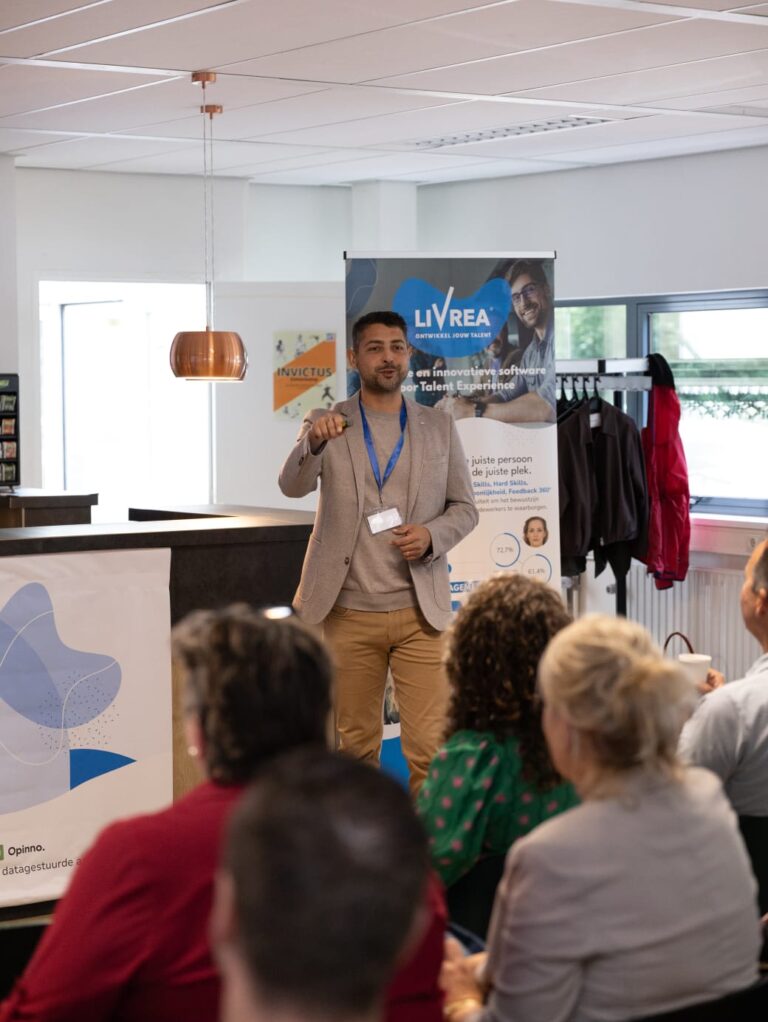
2. The thread running through It all: people first, technology second
If there was one idea that ran through the entire day (from the keynotes to the final panel discussion) it was this: artificial intelligence is a powerful tool, but useless without a deep understanding of the human competencies already present within an organisation.
“Before you start working with AI, you need to know which soft skills your organisation has today and which ones will still be needed tomorrow,” Nicolas Pastor summarised. “Start with the basics. Start from the beginning. Start with people“.
A message unanimously endorsed by everyone in the room, and the common thread of a day rich with insights, data and real-world stories.
3. The Speakers: four perspectives, one direction
Inge Grasmeijer-van der Pijl: “Skills, Generations and the value of every age”
The opening session addressed one of the most concrete, and most underestimated, challenges facing modern organisations: the coexistence of four generations in the same workplace.
Inge Grasmeijer-van der Pijl opened with a striking statistic: “Today, the Dutch labour market is home to Baby Boomers (12%), Generation X (28%), Millennials (35%) and Generation Z (25%). Four sets of values, expectations and working styles that are profoundly different, yet with far more in common than most people assume“.
Her session dismantled generational stereotypes to highlight the distinctive and complementary strengths of each group:
- the institutional memory and stability of Boomers
- the pragmatic resilience of Gen X
- the collaborative spirit and sense of purpose of Millennials
- the digital creativity and authentic courage of Gen Z
“Every generation brings unique skills. The combination is what makes the difference“, Inge concluded, making the case for multigenerational teams as a strategic advantage rather than a management headache. She proposed three practical steps for the audience: build a team “communication contract” that makes preferences and expectations explicit, introduce reversed mentoring programmes pairing different generations, and map individual competencies as the foundation for optimising teamwork.
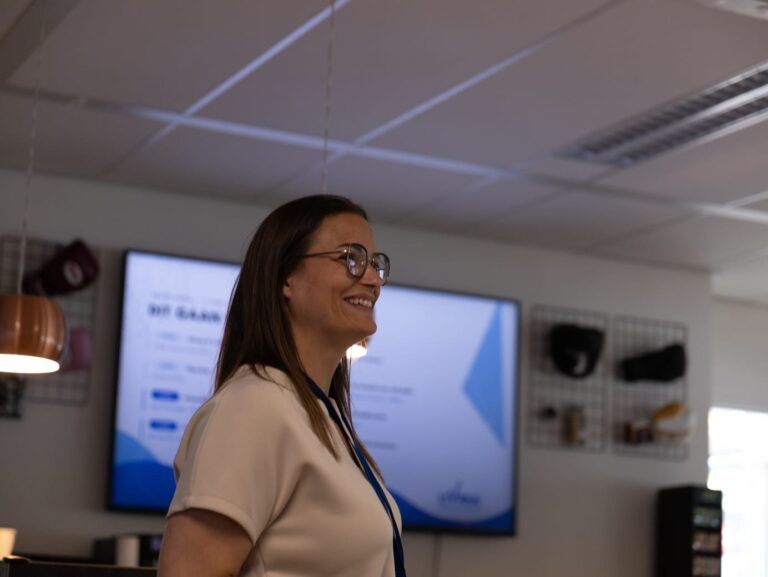
Jan van der Laan: “AI è un progetto HR, non un progetto IT”
Jan van der Laan, Workforce Architect and founder of The DataFather, brought to the room the question many organisations would rather avoid: is AI really a matter for the technology department, or is it, first and foremost, a people question?
“AI is not an axe for cutting jobs, it’s a lever for growth. The question isn’t how many people we can cut. The question is: which organisations have the courage to redesign work so that people, working alongside AI, create more value than ever before?“
Jan backed his argument with hard data: according to the McKinsey Global Institute, 57% of cognitive work time is already susceptible to AI influence today. By 2030, the World Economic Forum estimates that 39% of current skills will be obsolete or fundamentally transformed. And yet 82% of organisations want to deploy agentic AI within the next 12 months, while only 26% have already redesigned their operating model.
“Buying tools without redesigning the work means paying twice“.
The heart of his methodological proposal is werkherontwerp, literally “work redesign”: a five-step process that begins with mapping tasks by function (not job title), analyses which can be automated, redesigns workflows, identifies the required skills, and measures implementation through real changes in behaviour. He illustrated the point with two contrasting corporate approaches: Klarna, which laid off hundreds of employees by leaning on AI, saw customer satisfaction collapse and was forced to rehire. IKEA, which used technology to free 8,500 people from routine tasks and reskilled them for high-value relational work, saw both customer and employee satisfaction rise.
“HR is either the first proving ground or the first casualty. If HR doesn’t redesign its own work for AI first, it loses the credibility to lead that change across the rest of the organisation“.
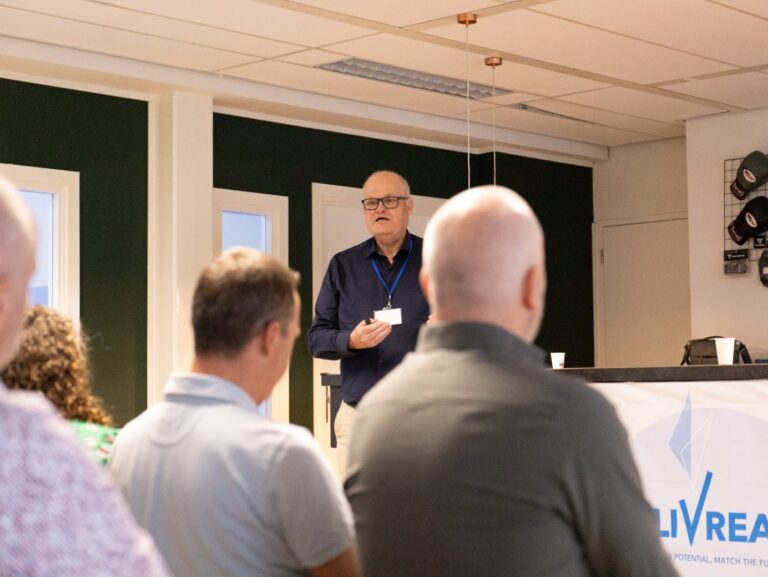
Bruno Fenaroli: “Why Soft Skills are the true human differentiator”
Bruno Fenaroli, Psychotherapist, Trainer and HR Consultant, brought the day’s deepest perspective: the psychological and human one.
“90% of people have never taken a soft skills assessment. And yet 89% of managerial failures are attributable to a lack of soft skills. Qualifications open doors, but soft skills determine success and wellbeing“.
Bruno introduced the Smart Got Talent (SGT) model developed by Smartpeg, which maps 20 soft skills across five macro-areas (Organisation, Method, Adaptability, Thinking and Leadership) as a framework for making soft skills measurable, comparable and systematically developable. His central argument: in the age of AI, soft skills are not “also important“, they are the true human differentiator.
“As tasks shift, what matters less is what someone can do today, and what matters more is what they are naturally inclined towards. Technical skills can be updated. Soft skills build the path. The future belongs to those who know who they are. Technical skills open doors. Soft skills let you build your own road”.
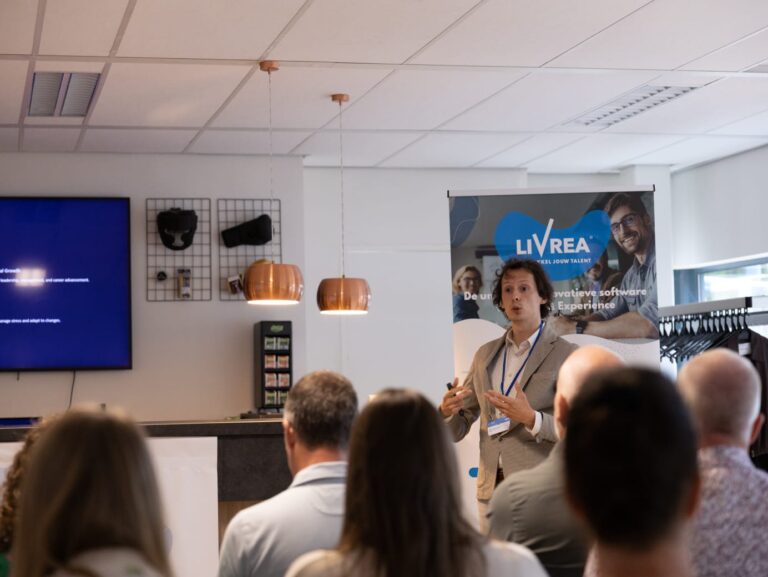
Dave Conrad: “LIVREA: making the invisible visible”
Dave Conrad of LIVREA BV closed the presentations with a personal reflection and a concrete demonstration of how the LIVREA platform puts everything discussed throughout the day into practice.
Drawing on his own story (growing up in Nieuwegein, a city where opportunity is far from guaranteed) Dave connected the topic of soft skills to the question of equal access: “Soft skills are not unevenly distributed in their presence. They are unevenly distributed in their visibility“.
The problem LIVREA sets out to solve is specific: organisations today hire, evaluate and promote on the basis of what is visible: CVs, academic qualifications, numerical output.
“All lagging indicators. The predictive element (soft skills) remains invisible, and therefore unmanageable“.
The data Dave presented, validated and certified by the University of Bologna (Alma Mater Studiorum), shows what happens when organisations begin to build teams on the basis of soft skills profiles:
- workplace happiness increases by 24,3%
- performance by 24%
- engagement by 35%
- team synergy by 28%
- hiring quality by 39%
“In a world full of AI, your greatest advantage is surprisingly human“.
4. The panel discussion: questions without easy answers
The closing session, moderated by Nicolas Pastor, brought all four speakers back on stage for an open exchange with the audience. Participants’ questions, collected at the start of the day through an interactive survey, touched on the most pressing issues: how do you genuinely measure the return on investment in soft skills development? How do you manage resistance from leaders who only want to see the numbers? How do you prevent AI in recruitment from amplifying bias rather than reducing it?
No definitive answers emerged and they couldn’t have. But something more valuable did: the shared recognition that asking the right questions is already changing the way those who ask them go about their work.
5. Smartpeg in Perugia, LIVREA in Amsterdam: a bridge that keeps Growing
One of the day’s most significant moments was the presence of the Smartpeg team, Bruno Fenaroli and Nicola Chiocchi, who travelled from Perugia to bring the perspective of those who built the methodological model on which LIVREA is founded.
The collaboration between Smartpeg, an Umbrian organisation with over 30 years of experience in talent development, and LIVREA BV, its Dutch spin-off, represents a model of knowledge transfer that is finding fertile ground in the Netherlands labour market.
6. What happens next?
Nicolas Pastor announced that in the coming weeks, the LIVREA team will continue its conversations with the professionals who attended, exploring the specific challenges facing their organisations and identifying how best to support them in transitioning towards a skills-based model of work.
The 9 June event was a starting point, not a conclusion. The question of how to govern the change brought about by AI, starting with people and their competencies, deserves, as Pastor himself put it, a much larger stage. And the work to build it has already begun.